
Nasendoscopy (Or Nasal Endoscopy) Procedure
A nasendoscopy is a commonly performed ENT procedure that allows a detailed look inside the nose, throat and voice box. It is quick, generally well tolerated and provides valuable information to help diagnose a wide range of ear, nose and throat conditions.
You may also see it referred to as a nasoendoscopy, or more broadly as a nasal endoscopy. While the terms are often used interchangeably, they all describe the same type of examination using a thin, flexible camera.
This guide explains what the procedure involves, why it may be recommended, and what you can expect before, during and after your appointment.
What Is Nasoendoscopy?
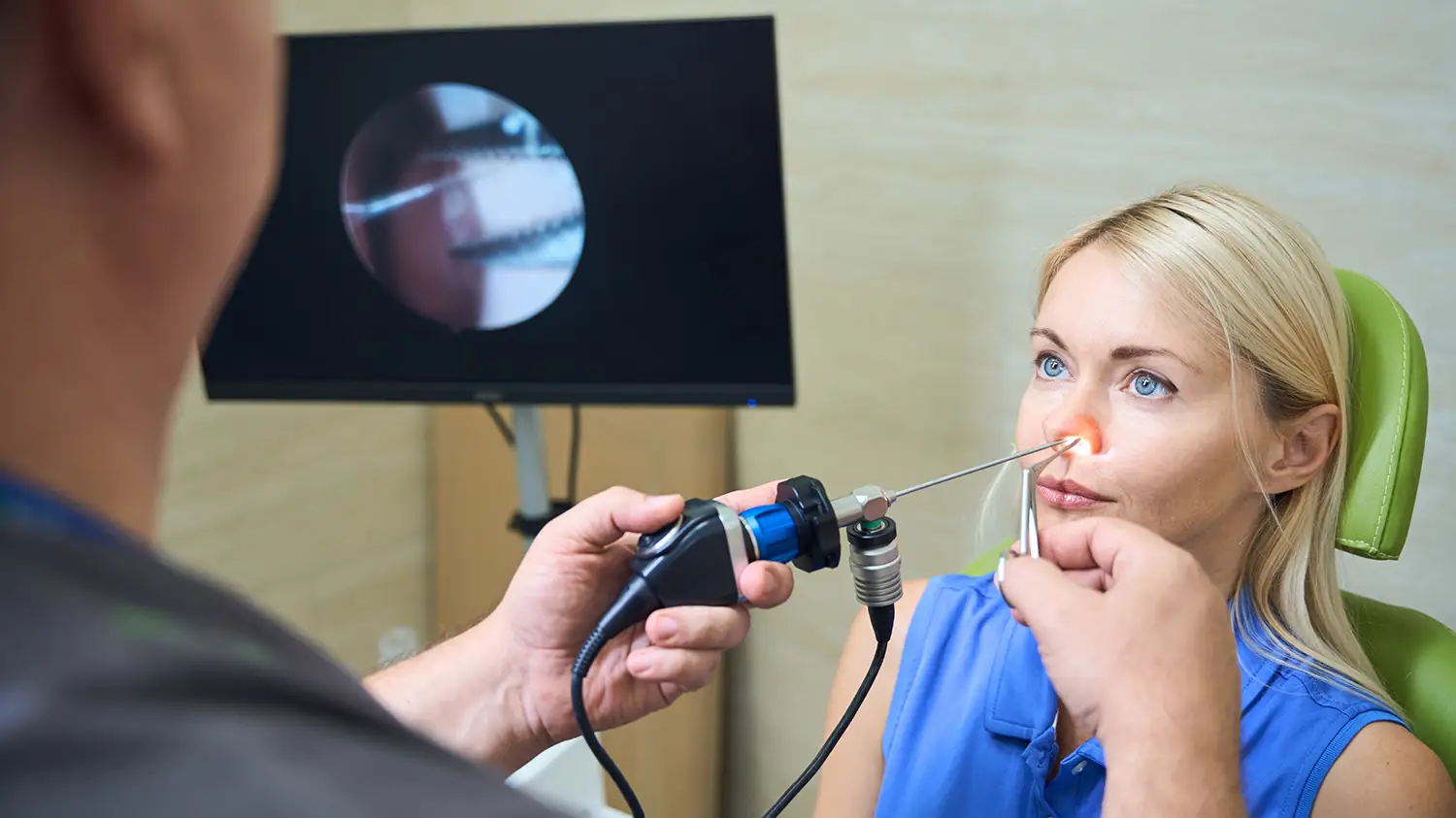
A nasendoscopy is a simple in-clinic examination where your ENT surgeon uses a thin, flexible tube that has a high-definition, illuminated camera to look inside the nasal cavity and throat. This common procedure is often referred to as a flexible nasendoscopy (FNE).
During the examination, your specialist is able to assess:
- Nasal and sinus passages and airflow
- Nasopharynx (upper part of the throat behind the nose)
- Throat (pharynx)
- Voice box (larynx), including the vocal cords
Because the images are viewed live on a screen, your specialist can assess function as well as structure, which is particularly useful when investigating symptoms that are not visible during a standard examination.
Most nasendoscopies are performed using a flexible endoscope, which can be gently guided through the nose and into the throat. In some situations, your ENT specialist may perform a rigid nasal endoscopy instead. This is a thin, straight camera that provides detailed views of the inside of the nose and certain sinus structures. The most appropriate type of endoscope depends on the area being examined and the symptoms being investigated.
What Can A Nasal Endoscopy Detect?
A nasendoscopy is typically recommended when your ENT specialist needs a clear, detailed view of the nose, throat or voice box to better understand your symptoms. It is often one of the first and most useful diagnostic tools in an ENT clinic because it provides real-time information that cannot be seen during a standard examination.
Rather than relying on symptoms alone, this procedure allows your specialist to directly assess what is happening inside the upper airway. This helps confirm a diagnosis early and guide treatment more precisely.
In many cases, a nasendoscopy can also help avoid unnecessary or more involved investigations. Because the examination provides immediate visual information, it may reduce the need for imaging such as CT or MRI scans, or prevent trial-and-error treatment approaches where the underlying cause is unclear.
Your ENT specialist may recommend a nasendoscopy if you are experiencing symptoms such as:
- Persistent nasal blockage or difficulty breathing through the nose
- Ongoing nasal and sinus disorders
- Chronic sinusitis or ongoing allergic reactions such as allergic rhinitis (hayfever)
- Sinus pressure and facial pain or recurrent sinus infections
- Recurrent or unexplained nosebleeds
- Voice changes or ongoing hoarseness
- Difficulty swallowing or discomfort when swallowing
- Snoring or signs of obstructive sleep disordered breathing
- Ongoing throat discomfort or a persistent sensation of something being “stuck”
These symptoms can have a range of possible causes, from inflammation and infection through to structural changes within the nasal passages or throat. A nasendoscopy allows these areas to be assessed directly so your specialist can identify what is contributing to your symptoms.
In most cases, the procedure is used as a targeted step to clarify the cause of symptoms and guide the most appropriate next stage of care. A nasendoscopy may sometimes be used when assessing patients who are being considered for procedures such as functional endoscopic sinus surgery (FESS).
How To Prepare For Your Nasendoscopy
In most cases, no special preparation is required before a nasendoscopy.
You can usually eat and drink normally unless advised otherwise. Your ENT specialist may use a local anaesthetic and short acting decongestant spray in the nose to improve comfort during the procedure and improve visibility.
It can be helpful to let your specialist know if you:
- Have a history of nosebleeds
- Are taking blood-thinners
- Have had previous nasal surgery or injury
The procedure is typically performed during your consultation and does not require hospital admission.
Nasendoscopy In Children: What Parents Can Expect
A nasendoscopy can also be performed in children when clinically needed. It is a generally safe, routine procedure that helps your ENT specialist assess nasal breathing, adenoids, throat function and voice concerns in a clear and accurate way or identifying a foreign body lodged within the nasal passage.
In most cases, the procedure is completed in the clinic while your child is awake. No sedation or general anaesthetic is required.
Your child will usually sit upright in a chair, and a parent is often able to stay close by for reassurance. The examination is performed gently and efficiently, with the focus on keeping your child as comfortable as possible throughout.
Because the endoscope is very thin and flexible, it passes easily through the nasal passage and does not interfere with breathing. Your child can breathe normally during the entire procedure.
It is also important to know that the examination is quick. The actual camera assessment typically takes only a few minutes, even if your appointment includes discussion beforehand or afterwards.
Some children may feel uncertain about the sensation at first. This is usually brief and may include a tickling feeling in the nose or watery eyes. The procedure can be paused at any time if needed, and your ENT specialist will always guide the process at a calm and steady pace.
Nasendoscopy in children is commonly used to assess:
- Enlarged adenoids
- Nasal obstruction or mouth breathing
- Snoring or sleep-related breathing concerns such as sleep apnoea
- Recurrent sinus or nasal symptoms
- Voice changes or chronic throat symptoms
Following the procedure, most children return to normal activities immediately. There is no recovery period required, although they may occasionally feel mild nasal irritation for a short time afterwards.
For parents, the main reassurance is that nasendoscopy provides valuable information without the need for hospital-based testing, and in most cases, it can help avoid more invasive investigations.
What Happens During The Nasendoscopy Procedure?
A nasendoscopy is performed in the consulting room and usually takes only a few minutes.
You will be seated upright while your ENT specialist gently passes the nasal endoscope into one nostril. The instrument is small and designed to move easily through the nasal passage.
As the tiny camera is guided through the nose, your specialist will:
- Observe the nasal lining and airflow pathways
- Examine the back of the nose and upper throat
- Assess the vocal cords as you are asked to make simple sounds or breathe in specific ways
If required, a local anaesthetic spray may be used to reduce sensitivity and make the procedure more comfortable. The images are displayed on a screen, allowing your specialist to explain findings to you in real time.
Is A Nasendoscopy Painful Or Uncomfortable?
A nasendoscopy is not considered painful, although it can feel unusual the first time. Some people experience:
- A tickling or light pressure sensation in the nose
- Watery eyes during the procedure
- A brief gag reflex when the endoscope passes deeper into the throat
These sensations are generally mild and short-lived. The procedure is designed to be as comfortable as possible, and you can let your specialist know at any time if you need to pause. Breathing remains normal throughout.
Is A Nasendoscopy Safe & How Long Does A Nasal Endoscopy Take?
A nasendoscopy is a very safe and routine diagnostic procedure.
Complications are uncommon, but may include:
- Mild nasal irritation
- Minor and short-lived nosebleeds in some cases
There are no known long-term risks, and most people tolerate the procedure well. It is routinely performed in ENT clinics as part of standard assessment.
What Your ENT Surgeon Can See
One of the key benefits of a nasendoscopy is the level of detail it provides. It allows your specialist to assess both structure and function in real time.
Findings may include:
- Nasal inflammation or swelling
- Nasal polyps
- Deviated nasal septum
- Signs of infection or excess mucus
- Structural and dynamic narrowing affecting airflow
- Changes in the vocal cords or larynx which may affect breathing and voice
- Signs of irritation or reflux-related changes in the throat
This information helps guide an accurate diagnosis and supports a more targeted treatment plan.
What Happens After The Procedure?
You can return to normal activities immediately after a nasendoscopy.
In many cases, your ENT specialist will discuss the results with you during the same appointment. If further investigations or treatment are needed, these will be explained clearly before you leave.
When To See An Ear Nose And Throat Specialist
You may benefit from an ENT assessment if you are experiencing:
- Ongoing nasal obstruction or difficulty breathing through the nose
- Persistent sinus or nasal symptoms
- Voice changes that do not resolve
- Difficulty swallowing or ongoing throat discomfort
- Recurrent nosebleeds or unexplained nasal symptoms
A nasendoscopy is often one of the first and most useful steps in identifying the underlying cause. Contact Complete ENT to arrange an initial consultation with one of our specialists.
Nasoendoscopy FAQs
Does A Nasendoscopy Require Anaesthetic?
Not always. A local anaesthetic spray may be used to improve comfort, but the majority of patients tolerate the procedure without it.
How Long Does A Nasendoscopy Take?
The nasal endoscopy procedure itself usually takes only a few minutes.
Can I Drive After A Nasendoscopy?
Yes. You can resume normal activities, including driving, immediately after your appointment.
Will I Get The Nasendoscopy Results Straight Away?
In most cases, your ENT specialist will explain the findings during the consultation.
Is A Nasendoscopy Suitable For Children?
Yes. A nasendoscopy can be safely performed in children when clinically indicated, with adjustments made for comfort and cooperation.
Nasoendoscopy Procedure At Complete ENT
A nasendoscopy is a straightforward, low-risk procedure that provides valuable insight into the health and function of your nose, throat, and voice box. While it may feel unfamiliar at first, it is generally well tolerated and completed within minutes.
For many patients, it is an important step toward understanding persistent symptoms and guiding effective treatment.
If you are experiencing ongoing nasal or throat concerns, an assessment at Complete ENT can help identify the cause and determine the most appropriate next steps.