
Adenotonsillectomy is a surgical procedure to remove the tonsils and adenoids, commonly performed in children to treat obstructive sleep apnoea and recurrent tonsillitis. The procedure is usually carried out under general anaesthetic and often requires an overnight hospital stay for observation.
Most children undergo adenotonsillectomy surgery to relieve sleep-disordered breathing, improve the quality of sleep and enhance overall wellbeing. By addressing the underlying cause of obstruction or recurrent infections, the surgery can have a significant positive impact on a child’s health and daily life.
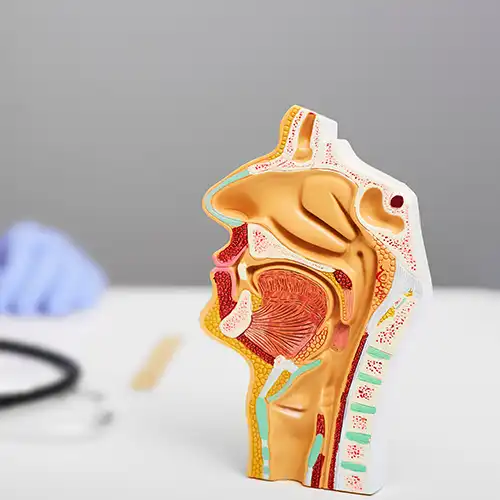

Adenotonsillectomy is performed under a general anaesthetic, meaning your child will be asleep and will not feel any pain during the operation. The procedure is carried out entirely through the child’s mouth; no external incisions are required. The surgeon performs a tonsillectomy and adenoidectomy all in one procedure. Modern techniques help to minimise discomfort, shorten recovery time and reduce the risk of complications, such as infection or post-operative bleeding.
The operation typically takes between 30 and 60 minutes, and most children remain in the hospital overnight for observation. This allows the medical team to monitor their recovery, manage any pain, and ensure they are comfortable before going home the next day.
During the procedure, a mouth gag is used to gently hold the mouth open, allowing the surgeon to work safely without external incisions. The tonsils may be completely removed, or in some cases partially preserved, depending on the child’s tonsillar size, symptoms and any comorbid conditions. Throughout the operation, care is taken to minimise intraoperative blood loss and protect the underlying muscular wall of the throat.
Before surgery, your child’s health and medical history are reviewed to ensure the procedure is safe and appropriate. Preparation typically involves:
A thorough pre-operative assessment ensures the surgery is carefully planned and tailored to your child’s needs. Parents are encouraged to discuss any concerns, including the potential risks. At Complete ENT we want parents to feel fully informed about the benefits and expected outcomes of the procedure.
Adenotonsillectomy is considered a safe and effective treatment for children; however, all surgeries carry some risks. The most important is the risk of bleeding, which may occur in the early post-operative period or during the second week as the surgical site heals. Very rarely, issues such as hypernasal speech, nasopharyngeal stenosis, or major complications can occur, though these are uncommon in otherwise healthy patients.
Children with enlarged adenoids, recurrent infections, or significant airway obstruction often benefit most from having both the tonsils and adenoids removed. Research, including systematic reviews from the Cochrane Database, supports adenotonsillectomy as a highly reliable treatment option in selected children.
Your surgeon will discuss individual risk factors, expected outcomes, and how your child’s normal healing process should progress.

Recovery after adenotonsillectomy is an important part of ensuring your child heals safely and comfortably. While most children experience some pain and discomfort, careful postoperative care can help manage symptoms and support a smooth recovery.
Regular pain management is essential. Most children will require regular pain relief, including regular paracetamol, particularly in the first few days. Some discomfort is expected, and many children experience sore ears, throat pain, or mild nausea and vomiting during recovery.
By combining careful monitoring, pain management, proper diet and activity guidance, parents can help their child navigate the first weeks after surgery successfully, supporting a full and complication-free recovery.
Many children experience temporary side effects as the body heals:
These symptoms are usually self-resolving and improve within a few days with proper pain management, rest and supportive care. Following the surgeon’s instructions closely will help your child recover safely and comfortably.
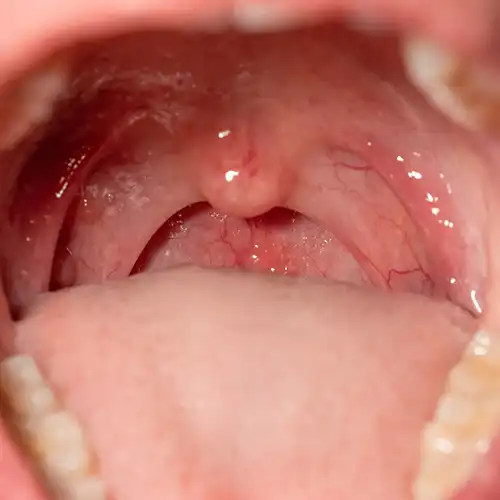
There are several surgical techniques used to remove the tonsils and adenoids. The approach chosen depends on your child’s symptoms, anatomy and overall health.
If required, your ENT doctor may combine procedures, such as adenotonsillectomy and grommets surgery.
In many children, enlarged tonsils and adenoids work together to narrow the airway, contributing to snoring, obstructive sleep apnoea, mouth breathing and poor sleep quality. Adenotonsillectomy addresses both sources of obstruction at once.
An adenoidectomy involves the removal of the adenoids, small glands located high in the throat behind the nose. Enlarged or chronically infected adenoids can block airflow, contribute to sleep-disordered breathing, and cause recurrent ear infections by affecting the function of the Eustachian tubes.
During an adenoidectomy, the adenoids are removed through the mouth using specialised instruments, without any external incisions. The procedure typically takes less than 30 minutes and is performed under general anaesthetic. Removing the adenoids can significantly improve nasal breathing, reduce snoring and decrease the frequency of ear infections.
In a partial tonsillectomy, only a portion of the tonsillar tissue is removed. This approach can effectively treat airway obstruction caused by enlarged tonsils while preserving some tonsil tissue, which may reduce pain and speed up recovery. It is often chosen for children whose main issue is breathing difficulty rather than infection.
An intracapsular tonsillectomy removes most of the tonsil tissue but leaves the thin outer capsule in place. This technique helps to protect the underlying muscles, which can significantly reduce post-operative pain, bleeding and recovery time. It is a modern, less invasive approach that maintains excellent surgical outcomes while improving comfort after surgery.

At Complete ENT, adenotonsillectomy procedures are performed by an experienced paediatric ENT surgeon, anaesthetist and specialised nursing staff. Each member of the team plays an important role in ensuring your child’s safety, comfort and wellbeing throughout every stage of care.
Our surgeons operate in accredited facilities equipped with advanced technology and strict safety protocols. From pre-operative preparation to post-surgical recovery, every aspect of the procedure is carefully managed to deliver the best possible outcomes.
We’re committed to helping families feel informed and supported through the entire process. Our team of specialists will ensure you understand the benefits, potential risks and expected recovery before proceeding, giving you confidence that your child is receiving the highest standard of care.

Call us on
07 3905 5999